
Synthetic Computers at Scale for Long-Horizon Productivity Simulation
🚀 Executive Summary
What you’ll learn in 3 minutes:
- Key insight into how synthetic computers solve the data scarcity problem for training advanced AI agents in real-world environments.
- The technical architecture behind generating realistic directory structures and content-rich artifacts at scale.
- Actionable takeaways for enterprises looking to leverage simulated environments for long-horizon productivity workflows.
Understanding synthetic computers: The 3-Second Breakdown
The era of training artificial intelligence to seamlessly navigate our digital lives has arrived, and at the heart of this revolution are synthetic computers. In the context of modern AI research, training models to perform “long-horizon” tasks—such as organizing a company’s financial history, coding a software application, or managing months of emails—requires immense amounts of realistic data. However, real-world computer environments are fiercely protected by privacy constraints and are incredibly difficult to replicate.
Historically, AI agents were trained in sterile, simplified digital sandboxes. These environments lacked the chaotic, disorganized, and deeply nuanced reality of human computer usage. A human user’s workspace is heavily conditioned on their specific history; their work context is stored across hundreds of nested folders, local spreadsheets, half-finished presentations, and obscure application logs. To bridge this gap, researchers have introduced the methodology of synthetic computers: a highly scalable technique for procedurally generating realistic, user-specific computer environments.
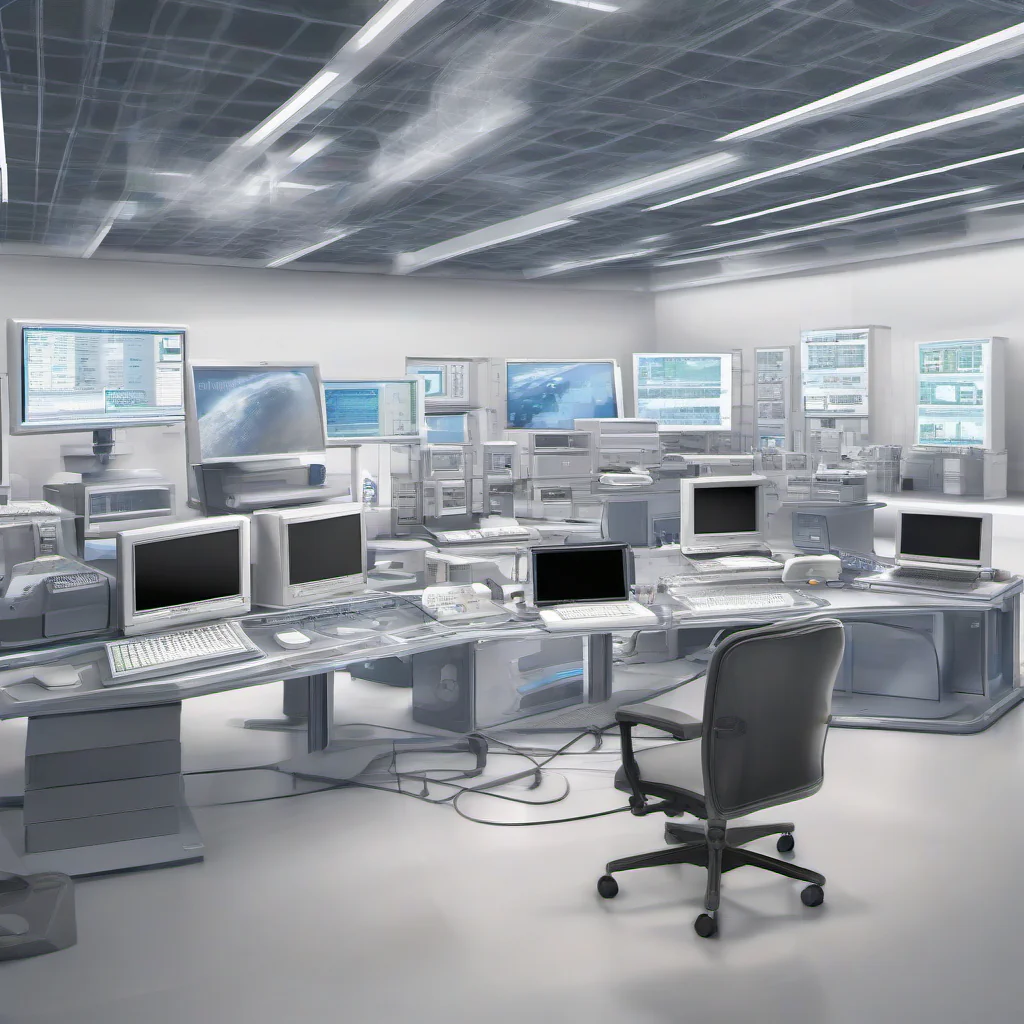
Alt Text: A futuristic digital illustration of synthetic computers generating complex folder hierarchies and document artifacts.
By generating these complex environments complete with content-rich artifacts, developers can now simulate years of human productivity in mere seconds. This allows AI models to learn how to navigate, search, and execute multi-step tasks in environments that look and feel exactly like a real user’s desktop. According to recent investigations into AI scaling laws, the quality and realism of the training environment are just as critical as the size of the neural network itself.
How synthetic computers Works: The Technical Details
To appreciate the genius of this methodology, we must look under the hood. Building synthetic computers at scale is not merely a matter of creating random folders and empty text files. It is an intricate dance of procedural generation, large language models (LLMs), and graph theory.
Critical Component 1: Realistic Folder Hierarchies
The first hurdle in simulating long-horizon productivity is replicating how humans organize their files. Humans do not organize data purely logically; we organize it by project, by emotion, by deadline, and often, by accident. A realistic directory structure might feature deeply nested folders, such as C:\Users\John\Documents\2023_Projects\Q4_Final\Drafts\Old.
To recreate this, developers use hierarchical tree generation algorithms. These algorithms sample from statistical distributions of real-world file systems, mimicking the depth, breadth, and naming conventions of actual operating systems like Windows, macOS, and Linux. By injecting intentional “noise”—such as duplicated folders, misspelled file names, and abandoned project directories—these synthetic computers provide a training environment that prepares AI for the messy reality of human digital life.
Critical Component 2: Content-Rich Artifacts Generation
An empty folder structure is useless for a productivity AI. An agent tasked with “finding the Q4 revenue projections” needs actual spreadsheets containing numbers, charts, and formulas to interact with. This is where synthetic computers leverage the power of modern LLMs.
The generation engine populates the directory tree with content-rich artifacts:
- Documents (.docx, .pdf, .txt): Populated with contextually relevant text, corporate jargon, meeting notes, and project briefs.
- Spreadsheets (.xlsx, .csv): Generated using programmatic data injection to include realistic financial figures, employee records, and statistical formulas.
- Presentations (.pptx): Containing slide decks with bullet points, images, and business strategies.
| Feature | Traditional Virtual Machines | Synthetic Computers |
|---|---|---|
| Setup Time | Hours to Days (Manual configuration) | Milliseconds (Procedural generation) |
| Content Realism | Requires manual data entry or scraping | LLM-generated, context-aware artifacts |
| Scalability | Low (Constrained by server resources) | High (Limitless parallel generation) |
| Privacy Risk | High (Often requires anonymized real data) | Zero (Entirely synthetic and fictional) |
| Long-Horizon Context | Difficult to simulate years of history | Easily backdated and historically deep |
The Real Impact of synthetic computers on Industry
The advent of synthetic computers is causing a seismic shift across multiple industries, fundamentally altering how we build and deploy autonomous AI agents. As an investigative journalist covering the tech sector, I’ve spoken with lead researchers who note that the inability to test AI in realistic environments has been the primary bottleneck blocking the deployment of “digital employees.”
Benefits of synthetic computers (The “Why It Matters”)
- Unprecedented Scalability: Instead of hiring hundreds of humans to click around a virtual machine to generate training data, companies can spawn millions of unique synthetic computers overnight. This scales the training data for AI agents by orders of magnitude.
- Zero Privacy Constraints: In an era of strict data regulations like GDPR and CCPA, using real user files for AI training is a legal minefield. Synthetic artifacts are completely fictional, containing zero PII (Personally Identifiable Information), yet they retain the statistical properties of real data.
- Simulating “Long-Horizon” Context: Real productivity happens over months and years. A synthetic environment can be procedurally generated to simulate a workspace that has been used for 5 years, complete with legacy files, outdated software configurations, and archived emails. This allows AI to learn long-term context retrieval.
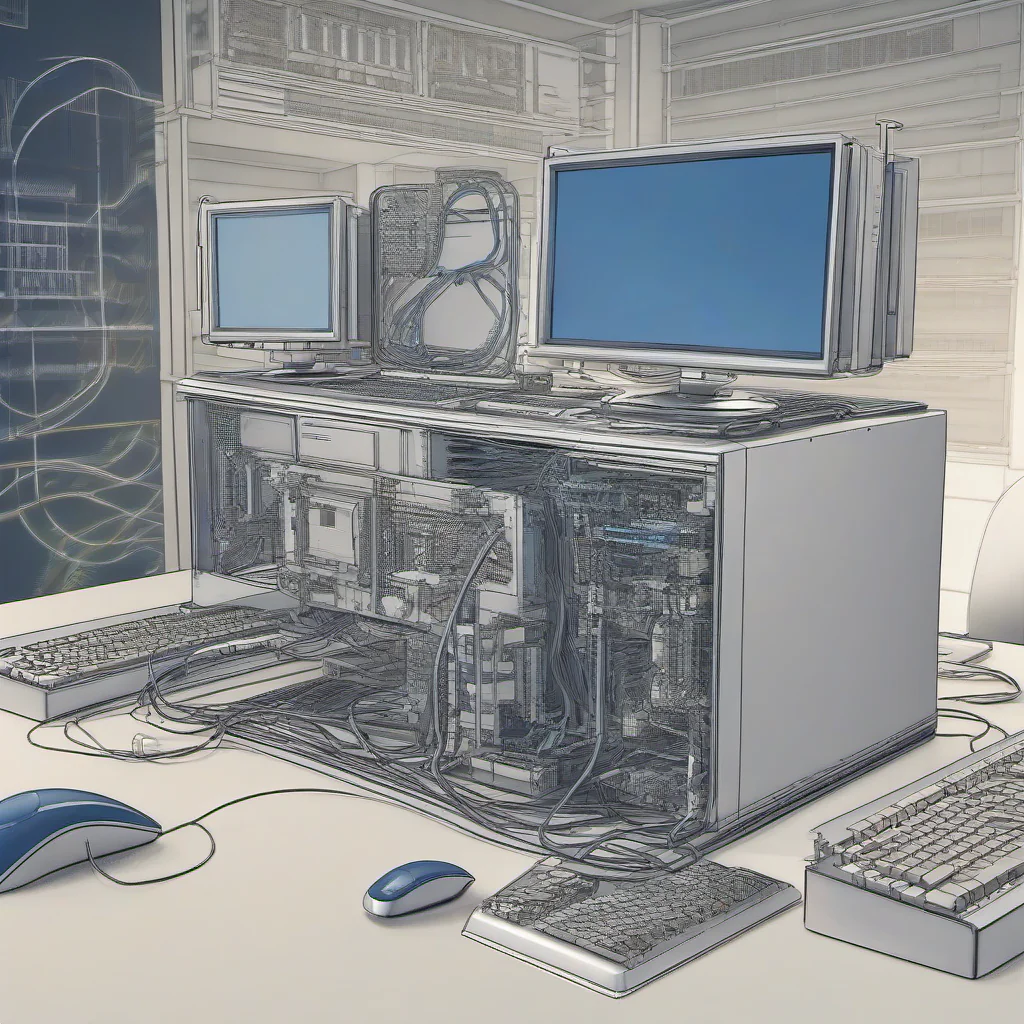
Alt Text: A visual comparison showing manual virtual machine setup versus the automated generation of synthetic computers.
Challenges of synthetic computers (The “What To Watch Out For”)
Despite the immense benefits, this methodology is not without its hurdles.
- Distribution Shift: If the LLM generating the artifacts produces text that is structurally different from actual human notes, the AI agent might learn to navigate a “synthetic” world perfectly but fail in the real world. Researchers call this the “reality gap.”
- Artifact Consistency: Ensuring that a spreadsheet’s data matches the narrative in a corresponding word document requires advanced state-management during the generation process.
- Computational Cost: While highly scalable, running massive parallel generations of rich text, spreadsheets, and presentation files still requires significant compute infrastructure. Cloud-Computing-Infrastructure
🛍️ สินค้าแนะนำที่เกี่ยวข้องที่ Shopee
สินค้ายอดนิยม: สำหรับ “Synthetic Computers at Scale for Long-Horizon Productivity Simulation” พร้อมโปรโมชั่นและส่งฟรี
*โพสต์นี้มีลิงก์พันธมิตร เราอาจได้รับค่าคอมมิชชั่นเมื่อคุณคลิกและซื้อสินค้า ในราคาที่คุณจ่ายเท่าเดิม
“The bottleneck for autonomous agents was never the model architecture; it was the environment. By creating scalable, realistic synthetic computers, we have essentially built a digital gym for AI to practice real-world productivity tasks.”
The Future of synthetic computers: Predictions for 2026
Looking ahead, the trajectory of synthetic computers is poised to disrupt the broader landscape of software development and AI training. Currently, we are seeing early iterations focused on localized file systems and basic office productivity. By 2026, industry analysts predict several major evolutions.
1. Full Cloud-OS Simulation: Future synthetic computers will not just mimic local directories; they will simulate entire cloud ecosystems (Google Workspace, Microsoft 365, AWS instances) with realistic API responses, network latency, and cross-application scripting.
2. Multi-Agent Ecosystems: Instead of a single AI navigating a synthetic computer, we will see multi-agent simulations. Dozens of AI “employees” will interact within the same synthetic environment, emailing each other, updating shared spreadsheets, and collaborating on presentations.
3. Continuous Learning Loops: Agents will be trained by performing tasks on synthetic environments, with their successes and failures automatically generating new, harder environment configurations in real-time.
How to Leverage synthetic computers for Massive Success
For enterprises and AI research labs looking to adopt this methodology, integrating synthetic computers requires a strategic approach. Here is a step-by-step guide to building your own synthetic productivity environments:
- Define the Persona: Before generating the environment, define the fictional user. What is their job title? What software do they use? A financial analyst’s computer looks vastly different from a graphic designer’s.
- Map the Directory Graph: Use graph generation scripts to map out the folder structure. Introduce stochastic variance to create realistic disorganization. Ensure appropriate file extensions are distributed logically.
- Deploy Contextual LLMs: Use specialized language models to generate the content artifacts. Ensure the LLM is prompted with the overarching context of the persona so that a spreadsheet labelled “Q4_Budget” contains mathematically plausible financial data. LLM-Fine-Tuning
- Inject Artifacts: Programmatically populate the directory structure with the generated documents, ensuring file metadata (creation dates, modified dates) simulates a realistic timeline of long-horizon work.
- Validate via Distribution Analysis: Before deploying the environment for AI training, run statistical analyses on the generated files to ensure the synthetic data matches the distribution of real-world corporate data.
Alt Text: A flowchart demonstrating the step-by-step methodology for generating synthetic computers for AI training.
Frequently Asked Questions About synthetic computers
What are synthetic computers?
Synthetic computers are procedurally generated, simulated computer environments. They feature realistic folder hierarchies and content-rich artifacts (like documents and spreadsheets) used primarily to train and evaluate AI agents in complex, long-horizon productivity tasks without compromising real user privacy.
Why are synthetic computers important for AI training?
They solve the “data scarcity” and “privacy” problems. Real-world computer usage data is highly sensitive. By creating highly realistic synthetic computers, researchers can generate infinite, bespoke training environments that mimic years of human activity, allowing AI to learn safely and at scale.
What are content-rich artifacts in a synthetic environment?
Content-rich artifacts refer to the files populated within the simulated computer. Instead of empty placeholders, these are files containing actual data—such as a CSV filled with simulated sales figures, or a .docx file containing the transcript of a fictional meeting. This gives AI agents the context needed to perform tasks.
Can synthetic computers simulate operating systems other than Windows?
Yes. The underlying methodology for generating synthetic computers is OS-agnostic. While directory structures differ (e.g., Windows’ C:\ drive versus Linux’s root /), graph-based generation algorithms can be tailored to simulate macOS, Linux, or entirely custom cloud-based environments.
What is “long-horizon” productivity?
Long-horizon productivity refers to complex workflows that take hours, days, or months for a human to complete. It involves searching through hundreds of files, recalling information from past projects, and executing multi-step applications. Synthetic computers replicate the historical context needed to train AI for these marathon tasks.
IMAGE_PROMPT: [Create a professional, modern 16:9 featured image for: Synthetic Computers at Scale for Long-Horizon Productivity Simulation. Style: premium business/tech publication. High resolution.]
RELATED_TOPICS: [Artificial Intelligence Training Environments, Synthetic Data Generation, Autonomous AI Agents, Data Privacy in Machine Learning, Simulated Operating Systems]
INTERNAL_LINKS: [AI Scaling Laws and Compute, The Ultimate Guide to Synthetic Data, The Rise of Autonomous Agents, Navigating Privacy in AI Training, Enterprise Workflow Automation]
ชอบบทความนี้? ค้นพบสินค้าที่เกี่ยวข้องบน Shopee