Nutrition Guide: What to Eat for Better Energy and Focus
It’s 2:47 PM. You’ve got three hours of work left, and your brain feels like it’s wading through wet cement. Sound familiar? You reach for coffee number four, and honestly, it barely helps anymore.
Here’s the thing nobody tells you: that afternoon crash usually isn’t about sleep. It’s about what you ate (or didn’t eat) at lunch. I spent years blaming my foggy afternoons on burnout before I realized a bagel at noon was the real culprit.
This nutrition guide: is built on actual research, not diet culture nonsense. Let’s fix your workday fuel.
Why Your Lunch Is Sabotaging Your Afternoon
The science here is simple. When you eat a meal heavy in refined carbs — white bread, sugary drinks, that pasta plate — your blood sugar spikes fast. Your body responds with a rush of insulin, and then your glucose crashes below where it started.
That crash shows up as brain fog, irritability, and the irresistible urge to nap under your desk. Researchers call it the postprandial dip. I call it the reason I once fell asleep in a client meeting.
Studies on workplace productivity consistently show that people who eat lunches rich in protein and fiber maintain steadier concentration through the afternoon. One landmark study even found that happier eating habits at lunch predicted better same-day performance.
The Core Four: What to Actually Put on Your Plate
Every solid nutrition guide: comes back to a few food groups that do the heavy lifting. Here’s my simple framework.
1. Slow carbs. Oats, brown rice, quinoa, sweet potatoes. These release glucose gradually, so your brain gets a steady drip of fuel instead of a flood then a drought.
2. Protein at every meal. Eggs, chicken, fish, tofu, Greek yogurt. Protein slows digestion, keeps you full, and provides the amino acids your brain uses to make neurotransmitters like dopamine — the molecule behind motivation.
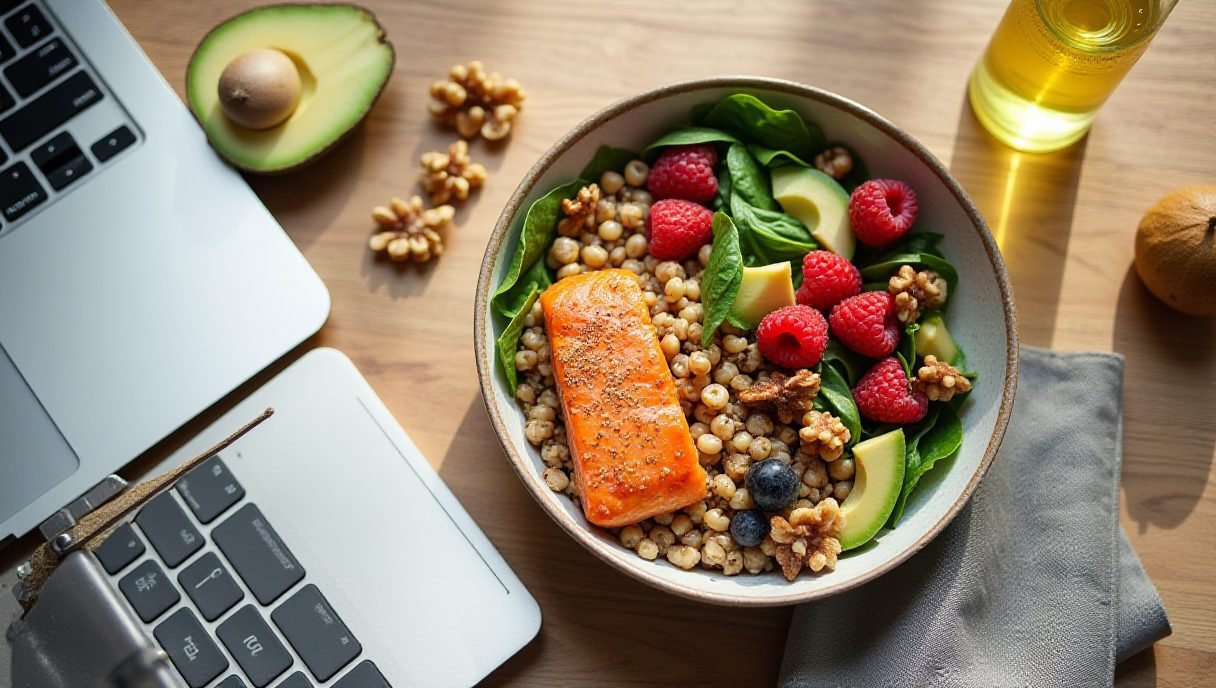
3. Healthy fats. Walnuts, avocado, olive oil, fatty fish like salmon. Your brain is roughly 60% fat, and omega-3s are linked to better cognitive function and mood stability.
4. Fiber and color. Leafy greens, berries, beans, broccoli. Fiber flattens the glucose curve, and the polyphenols in colorful produce support blood flow to the brain.
Build each meal around those four, and you’ve basically mastered 80% of eating for focus.
A Real Workday Eating Schedule
Let’s get concrete. Here’s what a focus-friendly day actually looks like, based on how I eat now versus my old bagel-and-regret routine.
Breakfast: Overnight oats with walnuts, berries, and a spoon of chia seeds. Or eggs with a slice of whole-grain toast and half an avocado. Both keep me full until noon without the 10 AM slump.
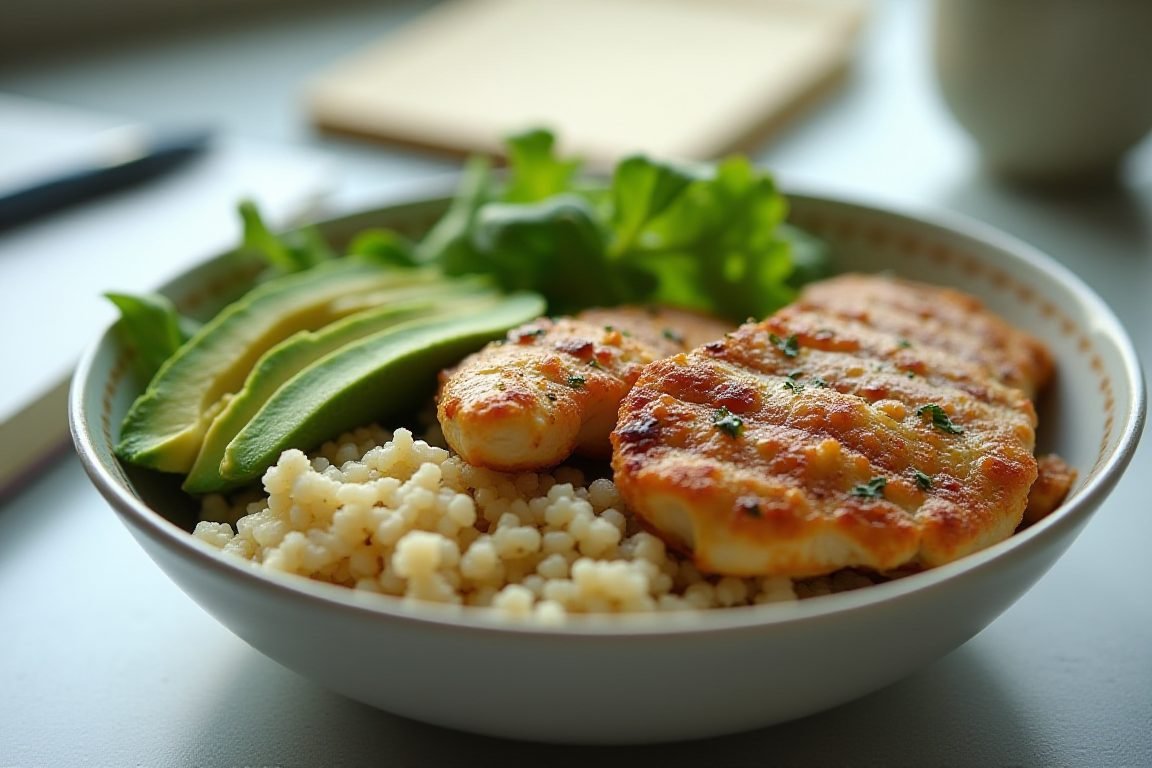
Lunch: This is where most people blow it. Aim for half your plate as vegetables, a palm of protein, and a modest portion of slow carbs. A grilled chicken grain bowl or a salmon-and-greens plate beats a sandwich almost every time.
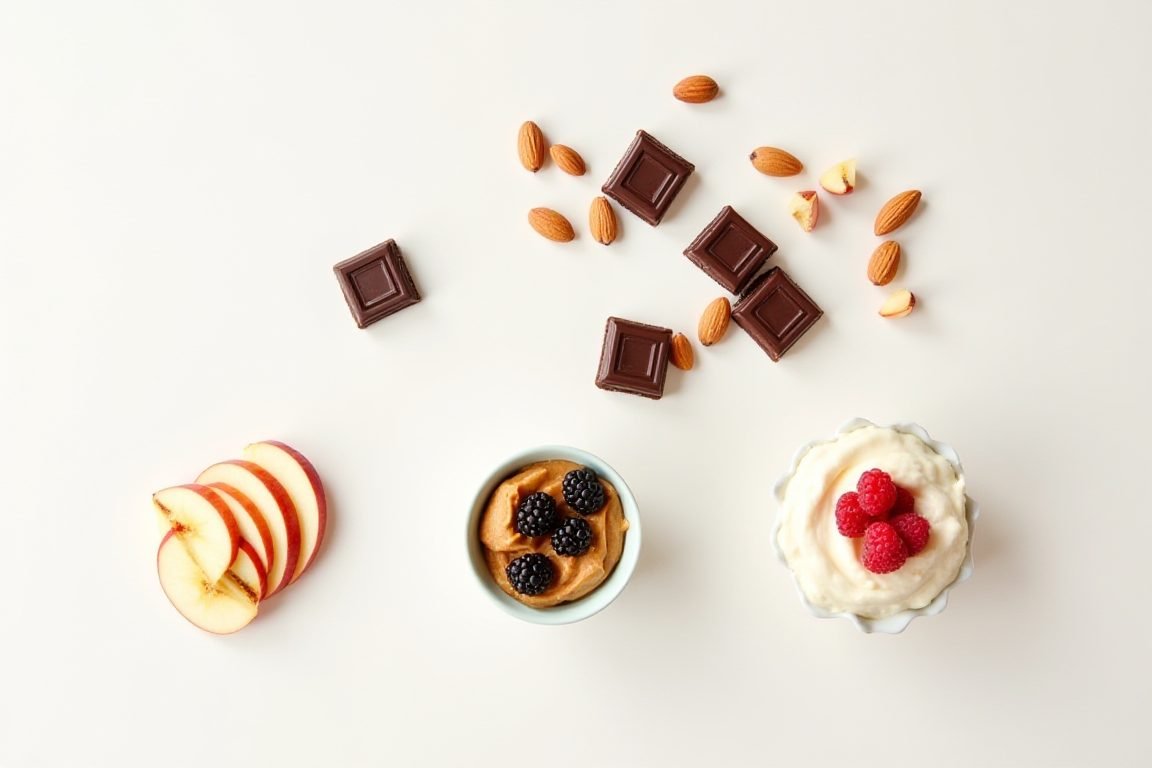
The 3 PM snack: Don’t skip it — just choose wisely. A handful of almonds, an apple with peanut butter, or plain Greek yogurt with honey. Dark chocolate (70%+) works too, and it feels like a treat.
Hydration: Mild dehydration of even 1–2% measurably impairs attention. Keep a water bottle at your desk and sip all day. If you’re bored of plain water, add lemon or cucumber.
Things You Need: Pro Tips
Getting this right at work is way easier with a few tools. These have earned permanent spots in my routine:
- A good insulated lunch box — something like a Bentgo or Zojirushi bento keeps your homemade lunch appealing, which stops the noon takeout trap.
- A large water bottle with time markers — brands like Hydro Flask or a simple motivational tracker bottle nudge you to drink consistently.
- Pre-portioned nut packs or a small blender — a Nutribullet in the office kitchen makes a 90-second breakfast smoothie totally doable.
Small gear, big behavioral payoff. When the healthy option is the easy option, you stop needing willpower.
Foods to Cut Back On (And What Swaps Work)
You don’t need perfection. But a few swaps move the needle fast:
- Soda or sweetened coffee → sparkling water with lime, or black coffee with a splash of milk.
- White bread at lunch → whole-grain or sprouted bread (Ezekiel is my pick).
- Candy bar snack → dark chocolate and almonds.
- Skip breakfast entirely → a protein smoothie you can drink at your desk.
And a word on alcohol: even a couple of drinks the night before noticeably tanks next-day focus. If you’ve got a big presentation, skip the weeknight wine.
Frequently Asked Questions
How long until I notice better energy from changing my diet?
Is coffee bad for focus?
Not at all — moderate caffeine (1–3 cups) genuinely improves alertness. The problem is using coffee to mask a bad diet. Fix the food first, then let coffee be a boost instead of a crutch.
Do I need to eat breakfast to have good energy?
Are energy drinks or supplements a good shortcut?
Mostly no. Energy drinks spike then crash you hard, and focus supplements rarely outperform a decent diet. If you want one supplement with real evidence behind it, creatine and omega-3s have decent research — but food comes first.
My honest recommendation: don’t overhaul everything at once. Pick one change — probably lunch — and run it for a week. When your afternoons stop feeling like a fight, you won’t need anyone to convince you the rest is worth it.
ชอบบทความนี้? ค้นพบสินค้าที่เกี่ยวข้องบน Shopee