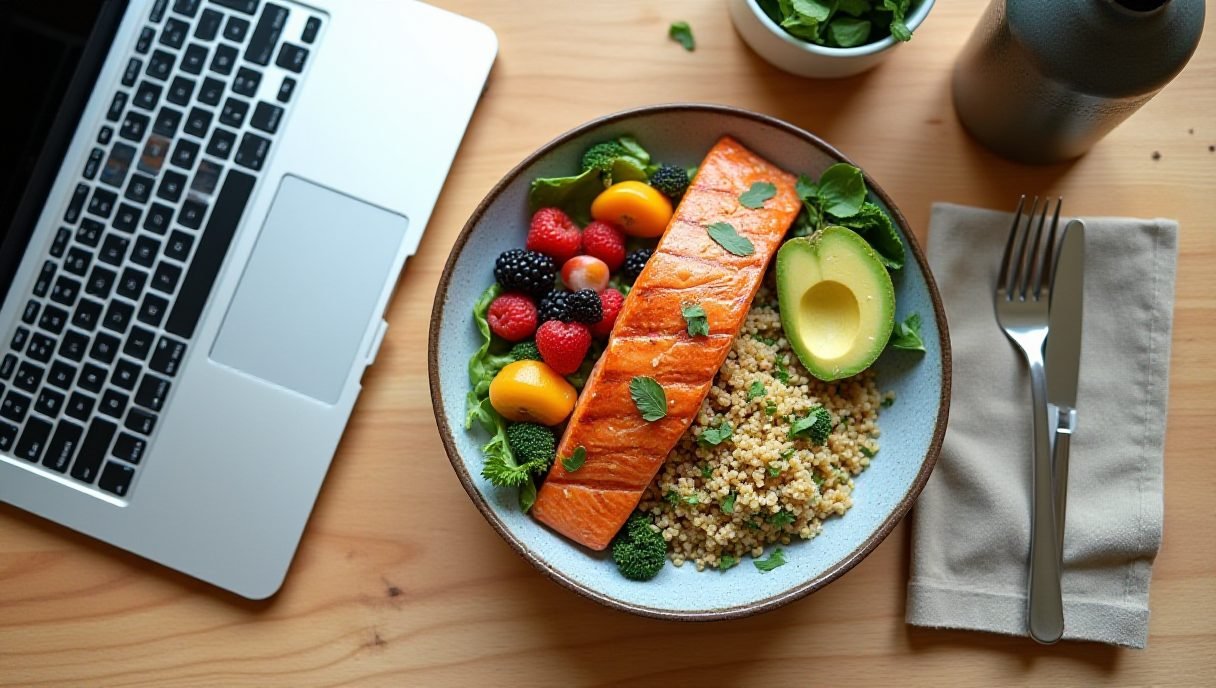
Nutrition Guide: What to Eat for Better Energy and Focus
It’s 2:47 PM. You’ve read the same email three times and your eyelids feel heavy enough to qualify as furniture. Sound familiar? I used to blame my sleep, my workload, even the weather — until I looked at my lunch plate.
Turns out, what you eat has a bigger impact on your afternoon brain than almost anything else. This nutrition guide: energy edition pulls together the evidence-based stuff that actually works, minus the fad diet noise.
Why Your Lunch Is Wrecking Your Afternoon
Here’s the mechanism in plain English. When you eat a big pile of refined carbs — white bread, sugary drinks, that pastry from the meeting room — your blood sugar spikes fast. Insulin floods in to clean it up, and you crash harder than the spike itself.
Researchers call it the postprandial dip. Your brain runs primarily on glucose, but it wants a slow, steady supply, not a firehose followed by a drought. One study after another links high-glycemic lunches to reduced alertness in the hours after eating.
The fix isn’t eating less. It’s eating smarter — pairing carbs with protein, fat, and fiber so energy releases slowly. That’s the core idea behind this nutrition guide: stability beats intensity every time.
Build the Plate That Keeps You Sharp
Start with protein at breakfast. Eggs, Greek yogurt, or tofu scramble. Protein in the morning steadies your appetite hormones and cuts the mid-morning snack attack. I swapped cereal for two eggs and noticed the difference within a week.
Then follow these principles for lunch:
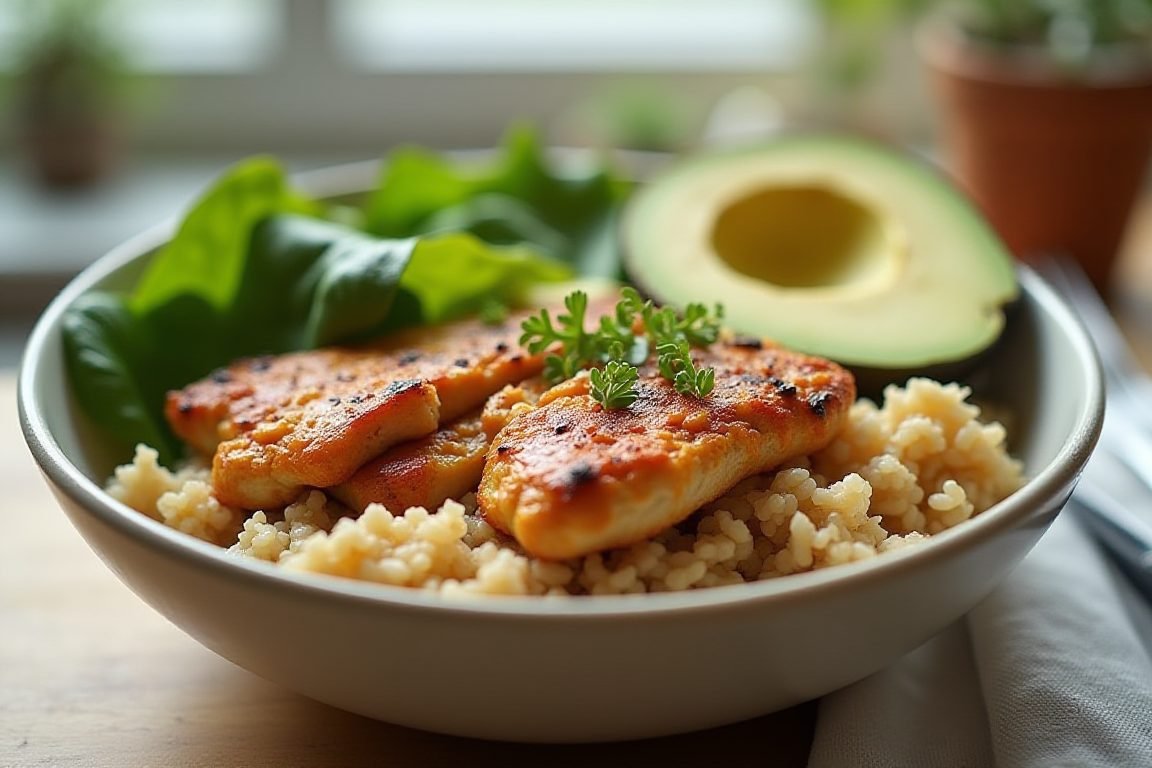
- Half the plate is vegetables or fruit — fiber slows glucose absorption.
- A palm of protein — chicken, fish, beans, lentils.
- Smart carbs — brown rice, quinoa, oats, whole-grain bread instead of white.
- A little healthy fat — avocado, olive oil, nuts.
Hydration matters more than most people think. Even mild dehydration — 1-2% — measurably reduces concentration and increases fatigue. Keep a water bottle at your desk and sip before you feel thirsty.
Foods That Punch Above Their Weight
A few specifics worth adding to your rotation:
Fatty fish (salmon, sardines, mackerel) delivers omega-3s, especially DHA, which is structurally important for brain cell membranes. Two servings a week is the standard recommendation.
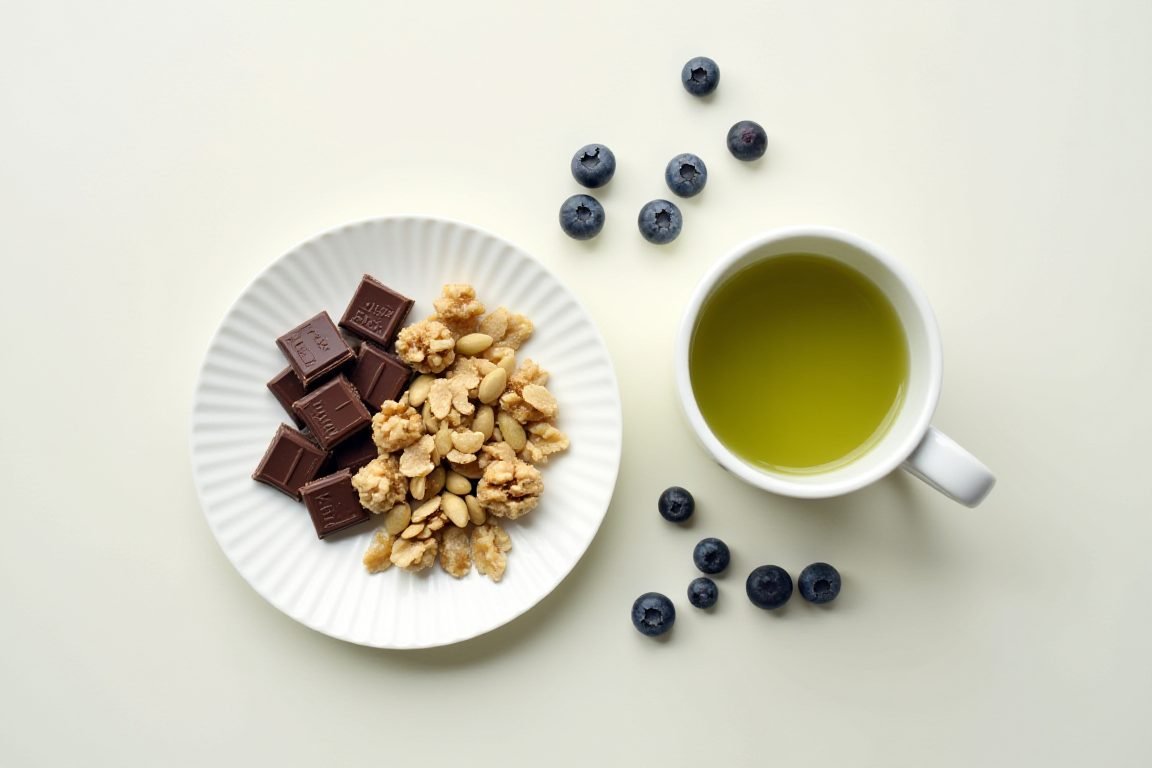
Berries and dark chocolate both carry flavonoids linked to improved blood flow to the brain. A small square of 70%+ chocolate with your afternoon coffee is a legitimately defensible snack. You’re welcome.
Nuts and seeds — a handful of walnuts or pumpkin seeds gives you magnesium, vitamin E, and stable energy without the crash. Keep them in your drawer instead of biscuits.
Green tea offers caffeine plus L-theanine, a combo studies show produces calmer, more sustained alertness than coffee alone. It’s my go-to for long writing sessions.
Things You Need (Pro Tips)
Preparing this nutrition guide: workday edition taught me that the right gear removes friction. These make healthy eating almost effortless:
- A good insulated lunch box — something like a Stanley or Zojirushi keeps meals intact until noon, so you’re not tempted by the food court.
- A large water bottle with time markers — brands like Hydro Flask or a simple motivational bottle train you to drink consistently.
- A small blender or Nutribullet — five-minute morning smoothies with oats, banana, spinach, and peanut butter are the fastest stable-energy breakfast I know.
None of this is fancy. But when the healthy option takes thirty seconds, you actually choose it.
🛍️ สินค้าแนะนำที่เกี่ยวข้องที่ Shopee
สินค้ายอดนิยม: สำหรับ “Nutrition Guide: What to Eat for Better Energy and Focus” พร้อมโปรโมชั่น
สินค้าคุณภาพที่เลือกมาให้ตรงกับเนื้อหาบทความ พร้อมรับประกันความพึงพอใจ
*โพสต์นี้มีลิงก์พันธมิตร เราอาจได้รับค่าคอมมิชชั่นเมื่อคุณคลิกและซื้อสินค้า ในราคาที่คุณจ่ายเท่าเดิม
What to Cut Back On
Sugary drinks are the biggest offender — liquid sugar hits your bloodstream fastest. Swap soda for sparkling water with lime; after two weeks you won’t miss it.
Watch out for “healthy” granola bars that are basically candy with better marketing. Read the label: if sugar is in the first three ingredients, skip it.
Heavy, greasy lunches redirect blood to digestion and leave you foggy. Save the feast-style meals for dinner, when a slowdown doesn’t cost you anything.
And go easy on afternoon caffeine after 2 PM. It lingers in your system for hours and quietly sabotages the sleep that fuels tomorrow’s focus. Think of this nutrition guide: long-game edition — everything compounds.
FAQ
What’s the best breakfast for focus?
How much coffee is too much?
Do I need to snack between meals?
Can certain foods really improve concentration?
If you only take one thing from this nutrition guide: energy and focus, make it this — swap one refined-carb meal a day for a balanced one, and pay attention to how 3 PM feels after a week. That single experiment convinced me more than any study ever did.
ชอบบทความนี้? ค้นพบสินค้าที่เกี่ยวข้องบน Shopee