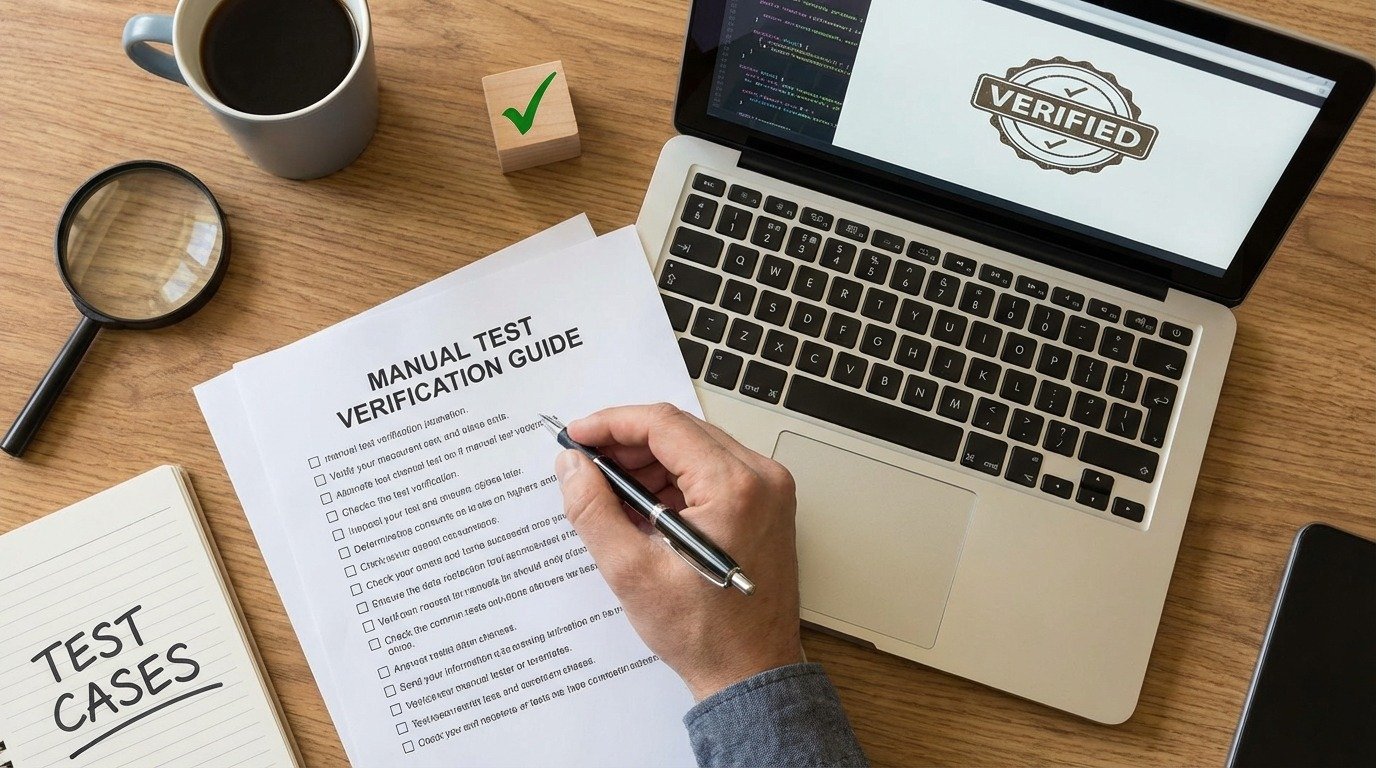
Test Verification: Ensuring Your Software Meets Every Standard
Have you ever spent weeks building a feature only to realize it doesn’t actually align with the original requirements? It’s a common headache in the development world. Fortunately, it is one that can be easily cured through proper test verification.
While many teams jump straight into the ‘does it work’ phase, verification is the crucial step of asking, ‘Are we building this the right way?’
In the world of manual testing, test verification acts as your compass. It ensures that every line of code and every user interface element aligns perfectly with the documented specifications before you even get to the heavy lifting of execution. In this guide, we break down why this process is the secret sauce for high-quality software in 2026 and how you can master it.
By the end of this article, you will understand the nuances of the manual verification process and how to implement it effectively. We’ll move beyond the jargon and look at the practical, human-centered approach to making sure your software is on the right track from day one.

Why Test Verification is the Backbone of Manual Testing
When we talk about test verification, we are referring to the evaluation of software work products. This includes looking at requirement documents, design specifications, and even the test cases themselves. The goal is to catch errors early in the SDLC, where they are significantly cheaper and easier to fix.
Think of it as a safety net. Without a solid verification phase, your manual testing team might spend hours testing a feature that was fundamentally misunderstood from the start. Test verification provides the clarity needed to ensure that the testing effort is focused on the right goals.
- Early Bug Detection: Catching a logical flaw in a requirement document is 10x to 100x cheaper than fixing a bug in production.
- Consistency: It ensures that all stakeholders have a unified understanding of what is being built.
- Reduced Costs: By verifying early, you avoid the ‘re-work’ loop that drains project budgets.
Ultimately, verification is about process quality. It is a proactive measure that sets the stage for a successful validation phase later on.
The Core Steps in the Manual Verification Process
Mastering test verification doesn’t happen by accident; it requires a structured approach. Even in a manual context, having a repeatable checklist can make the difference between a buggy release and a smooth launch.
1. Requirement Review
The first step is always the Requirement Review. This is where you sit down with the product owner or analyst and scrutinize the user stories. You are looking for ambiguity, contradictions, or missing details that could lead to development errors. If a requirement isn’t clear, it cannot be verified.
2. Design Verification
Next comes Design Verification. Here, the manual tester looks at the UI/UX mockups or architecture diagrams. Does the layout match the requirements? Is the navigation logical? By verifying these elements visually, you ensure the ‘blueprints’ are sound before the first brick is laid.

3. Test Case Verification
Finally, we have Test Case Verification. Before you start clicking buttons, you must verify that your test cases actually cover the requirements. A common mistake is writing test cases that only check for ‘happy paths’ while ignoring edge cases. A thorough verification ensures your manual test suite is robust and comprehensive.
Is Test Verification Different from Test Validation?
This is perhaps the most common question in the industry. While the terms are often used interchangeably, they serve distinct purposes in the software development lifecycle. Understanding the difference is key to a balanced quality strategy.
Test Verification (Static Testing)
This is a static process. It involves reviewing documents, code, and designs without actually running the software. It asks: ‘Are we building the product right?’ It focuses on the internal processes and whether the development is following the specified path.
Test Validation (Dynamic Testing)
Validation is a dynamic process. This is when you actually execute the software and interact with it. It asks: ‘Are we building the right product?’ Validation is about ensuring the final product meets the user’s needs and works in a real-world environment.
In a manual testing environment, you need both. Verification clears the path, and validation proves you reached the destination.
Common Challenges in Manual Verification
Manual test verification isn’t without its hurdles. One of the biggest challenges is subjectivity. Different testers might interpret a requirement in different ways. To combat this, use standardized checklists and hold peer review sessions to reach a consensus.
Another hurdle is time pressure. When deadlines loom, verification is often the first thing to be cut. However, this is a false economy. Skipping verification usually leads to more bugs in the validation phase, which takes even longer to fix.
- Ambiguous Requirements: Always push back on vague language like ‘the system should be fast.’ Define exactly what ‘fast’ means (e.g., loads in under 2 seconds).
- Lack of Documentation: If there’s no document to verify against, the tester’s job becomes guesswork. Demand at least basic sketches or bullet points.
- Human Fatigue: Reviewing documents can be tedious. Break verification tasks into smaller, manageable chunks to maintain focus.
Frequently Asked Questions About Test Verification
What is the primary goal of test verification?
The primary goal is to ensure that the software development process and the work products (like requirements and designs) comply with the specified standards. It is a proactive way to find defects before the software is executed.
Can test verification be done without automation?
Yes, absolutely! While modern tools help, most verification activities are manual by nature, including walkthroughs, inspections, and peer reviews of documentation.
Does test verification happen before or after coding?
Test verification typically starts before coding begins (by verifying requirements) and continues during the coding phase (through code reviews). It is an ongoing process throughout the early stages of the SDLC.