Investing 2026: Where to Put Your Money
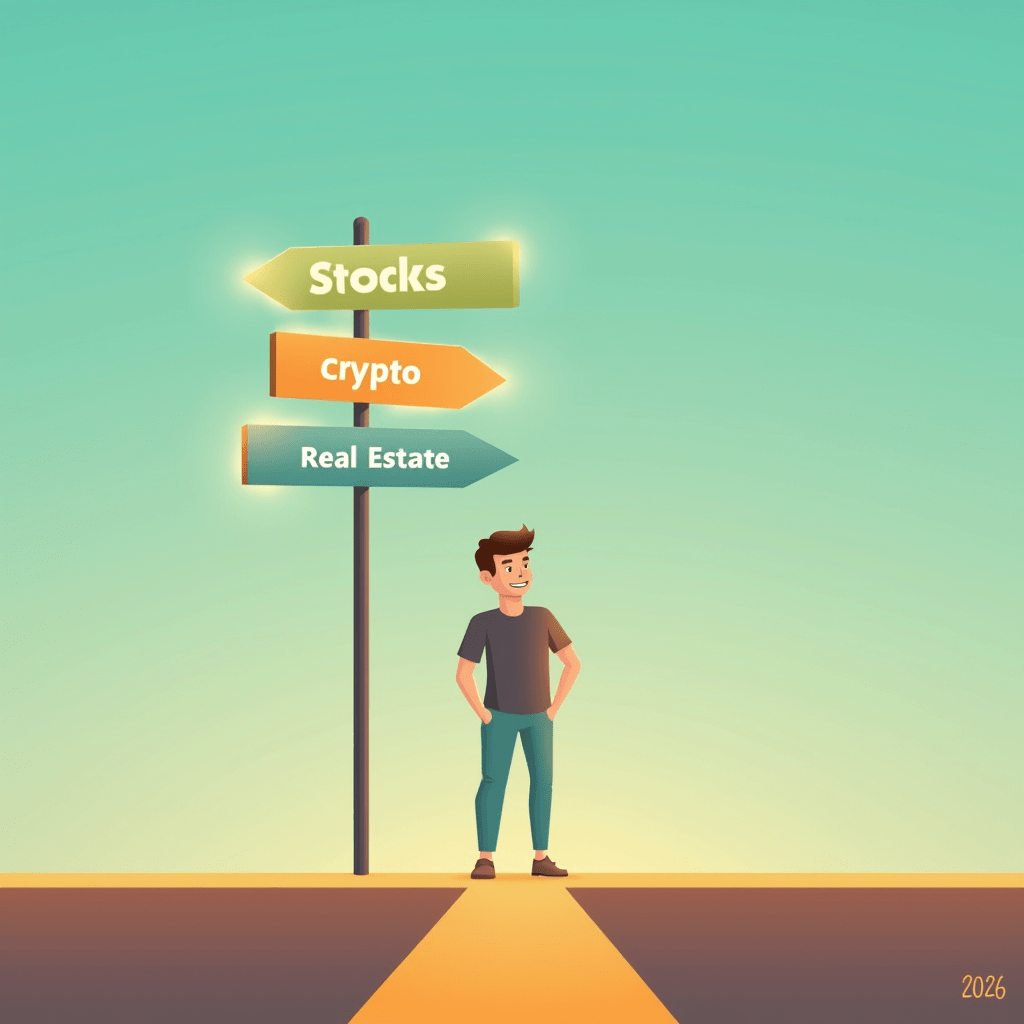
My cousin texted me last month with $15,000 sitting in savings and one question: “Where do I even put this?” She’s not alone. Half my group chat has sent me some version of that message since November.
Here’s my honest take after a decade of watching markets: 2026 isn’t about finding one magical asset. It’s about spreading your bets so you win in most scenarios — and sleep well through the rest.

Investing 2026: Stocks Still Do the Heavy Lifting
I’ll say the unpopular thing first — boring index funds will probably outperform most flashy alternatives again in 2026. A plain S&P 500 ETF like VOO has beaten roughly 80% of professional stock pickers over 15-year stretches. That stat hasn’t budged in decades.
What has changed? Valuations are rich. US large caps got expensive, which means realistic returns over the next decade sit closer to 5-7% than the 10% we got spoiled with. That’s not a reason to sell — it’s a reason to temper expectations and diversify beyond the Magnificent Seven.
- Core (60-70% of your stock money): broad index funds
- Satellite (20-30%): international and emerging markets, which look cheap by comparison
- Fun money (0-10%): individual stocks you genuinely believe in
Search “investing 2026: best returns” and you’ll find a hundred hot takes. Ignore most of them. Consistency beats cleverness nearly every single year.
Crypto’s Second Act: Grown-Up Money or Casino?
Bitcoin ETFs changed the game. Wall Street now owns a serious chunk of BTC, and with friendlier regulation on the horizon, institutions aren’t leaving. My view? Crypto is an asset class, not a lottery ticket — but only if you treat it like one.
That means capping it at 5-10% of your portfolio. Bitcoin and Ethereum first; the long tail of altcoins is where people get wrecked. I watched a friend dump his entire bonus into a meme coin in 2021. He’s still down 90% and still bitter about it.
Every “investing 2026: crypto predictions” article promises 10x returns. What they skip is the non-negotiable: if you’re holding real money, move it off exchanges and into self-custody. We’ll cover the tool for that below.
Investing 2026: Real Estate’s Quiet Comeback
Nobody’s talking about it, but mortgage rates are drifting down, and that thaws a housing market that’s been frozen since 2022. Sellers locked into low rates finally get to move. Years of pent-up demand are about to meet years of pent-up supply.
You don’t need $100K for a down payment, though. REITs let you own slices of apartment buildings, warehouses, and data centers for the price of one share. Data center REITs especially interest me — all that AI compute needs somewhere physical to live.
Rental property still works if you’re hands-on. Just go in with eyes open, because one bad tenant or a busted water heater can erase a year of cash flow. My rule: only buy physical property if you’ve got six months of expenses saved beyond the down payment.
Alternatives: The Boring Stuff That Saves You
Gold had a monster run recently, and I get the appeal. It’s the asset that doesn’t break when everything else does. A 5-10% allocation — physical or through an ETF like GLD — is reasonable insurance, not a get-rich plan.
A few other alternatives worth knowing about:
- High-yield savings & Treasury bills — still paying real returns, perfect for your emergency fund
- Private credit funds — finally opening to regular investors, yielding 8-10%, but they lock up your cash
- Art & collectibles — fun, illiquid, and mostly a rich person’s game. Skip unless you genuinely love it
The point of alternatives isn’t big returns. It’s keeping your portfolio alive when stocks and crypto both have a rough year — because eventually, they will.
Things You Need Before You Start
You don’t need much, but a few tools make the whole journey easier:
- A Ledger Nano X hardware wallet — if you’re holding crypto long-term, this pocket-sized device keeps your keys offline and away from hackers. Cheap peace of mind.
- “The Psychology of Money” by Morgan Housel — the one investing book I gift constantly. It fixes your mental game, which is where most people actually fail.
- A simple budget planner or whiteboard — tracking monthly contributions by hand sounds old-school, but it’s the habit that finally made me consistent.
Beyond that, you just need a low-cost brokerage account. Fidelity, Vanguard, Interactive Brokers — fees near zero, fractional shares included.
A Sample Split to Steal
Google “investing 2026: perfect portfolio” and you’ll get a thousand confident answers. Here’s the one I’d actually give my cousin, assuming she’s a 30-something with moderate risk tolerance:
- 50% stocks — mostly index funds, with some international sprinkled in
- 10% crypto — Bitcoin-heavy, stored in cold storage
- 15% real estate exposure — REITs for now
- 10% gold — the panic button
- 15% cash & T-bills — sleep-at-night money and dry powder for dips
Rebalance once a year. Ignore the noise in between. Honestly, that’s 90% of the job.
This is my opinion, not financial advice — if your stakes are high, talk to a real professional.
Frequently Asked Questions
How much money do I need to start investing in 2026?
Way less than you’d think. Most brokerages offer fractional shares, so $10-50 gets you into an index fund today. Start small, automate a monthly amount, and increase it as your income grows.
Should I pick individual stocks or just buy index funds?
For most people, index funds win. Around 80% of professional pickers underperform the S&P 500 over 15 years, and they do this full-time. If you want to pick stocks, cap it at 10% of your portfolio as “fun money.”
Is crypto still too risky for beginners?
It’s risky, but manageable risk. Keep it to 5-10% of your portfolio, stick mostly to Bitcoin and Ethereum, and only invest what you could lose without crying. And if you’re holding serious amounts, get a hardware wallet.
What’s the biggest mistake new investors make?
Waiting for the “perfect” moment to start, then panic-selling the first dip. Time in the market beats timing the market — someone who invested a lump sum before every major crash still came out ahead over 20 years.
REITs or physical rental property — which is better for 2026?
REITs for simplicity: no tenants, no toilets, and you can start with one share’s worth of cash. Physical rentals can earn more if you’re hands-on, but only take that leap with a fat emergency fund and honest math on repair costs.
ชอบบทความนี้? ค้นพบสินค้าที่เกี่ยวข้องบน Shopee